Smart HVAC Filtration
Smart HVAC filtration targets fine particles (PM2.5) by combining mechanical filtration with control logic that reacts to conditions like outdoor air quality or indoor particle readings. In practice, the biggest gains come from using the right filter media, sealing it so air passes through the filter rather than around it, and matching airflow so the system does not bypass or stall. If you run a central system with a filter that leaks at the frame, the “smart” part cannot fix the physics of bypass flow.
PM2.5 enters homes through infiltration, ventilation, and indoor sources such as cooking aerosols and candles. Outdoor PM2.5 often rises during wildfire smoke events and heavy traffic periods, and indoor levels can lag outdoor changes depending on building tightness and HVAC runtime. A smart controller can increase filtration time during high-pollution windows, but it still depends on the filter’s ability to capture particles at the system’s actual airflow rate.
Main Problems And Pain Points
People often assume that a higher MERV number automatically means lower PM2.5 indoors. MERV ratings describe dust-spot efficiency using a specific test method, not real-world particle behavior across all sizes and airflow conditions. A filter with a high MERV rating can still underperform if the HVAC fan runs at a low or high static pressure, if the filter is installed with gaps, or if the system’s airflow drops enough that the bypass fraction rises.
Another common issue is confusing filtration with ventilation. If a home uses an air exchanger or brings in outdoor air, outdoor PM2.5 can enter directly through that stream unless the intake is filtered and controlled. Smart HVAC features that increase outdoor air during “fresh air” modes can raise indoor PM2.5 when outdoor air is dirty, even if the return-side filter is high quality. The control logic needs to know when to limit outdoor air and when to run recirculation.
Sensor-driven control also has limits. Many consumer particle sensors measure PM2.5 using optical scattering and can drift with humidity, temperature swings, and particle composition. A sensor reading can still be useful for trends, but it should not be treated as a medical-grade instrument. I have seen setups where a sensor placed near a supply vent reported lower PM2.5 than the rest of the room, which led to shorter runtime—annoying, because the system was “correct” for that location.
Supporting technologies matter: the HVAC fan curve, duct leakage, filter pressure drop, and the presence of bypass dampers. A smart thermostat may schedule runtime, but it cannot fix a filter rack that does not seal. If the system uses a bypass humidifier or has leaky return ducts, some air can avoid the filter entirely. Those dependencies explain why two homes with the same filter label can show different indoor PM2.5 outcomes.
Solutions And Advice
Choose Filters With Fit
Start with filter media that targets PM2.5 capture at realistic airflow. In many homes, MERV 13 or MERV 14 filters are a common compromise, while higher ratings can increase pressure drop. Check the HVAC manufacturer’s guidance for maximum static pressure and filter size, then measure the actual filter pressure drop if you can. A practical aside: if you swap filters and the system sounds louder or the airflow feels weaker, the pressure drop may be too high for the fan to maintain design flow.
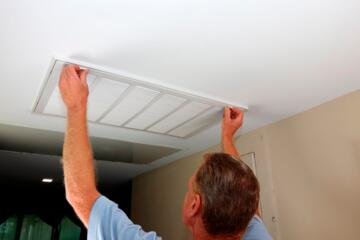
Fit and sealing often decide whether filtration performs. Use the correct size for the filter frame, and inspect the gasket or filter rack for gaps. If the system has a filter slot with a rigid frame, ensure the filter sits flush on all sides. For homes with leaky filter racks, adding an appropriate gasket material can reduce bypass, but any modification should not interfere with airflow or create new leaks elsewhere.
Control Runtime During Peaks
Smart control should increase filtration time when PM2.5 is elevated, not just when temperature or humidity changes. A common approach is to run the fan on a schedule that covers morning and evening peaks, then extend runtime during smoke or high outdoor AQI periods. If your system supports it, use recirculation mode rather than outdoor air intake during high-PM events.
For sensor-based control, place the particle sensor where it reflects typical breathing-zone air and avoid direct proximity to supply registers. Many controllers use thresholds and time delays to prevent rapid cycling; tune those settings so the system does not short-cycle. A mild frustration: some apps hide the logic behind “comfort” modes, so you may need to read the controller manual to find whether it uses PM2.5, AQI, or only outdoor temperature.
Verify Airflow And Pressure
Filtration performance depends on airflow through the filter media. If the fan cannot maintain airflow due to high pressure drop, the system may reduce total air movement, and the effective clean-air delivery rate can fall. Measure or estimate static pressure across the filter slot when possible, and compare it to the HVAC’s allowable range. If you do not have instrumentation, you can still watch for symptoms such as reduced supply airflow, longer heating/cooling cycles, or increased noise.
For ducted systems, duct leakage can reduce the fraction of filtered air that reaches rooms. Sealing major duct leaks and ensuring return paths are tight can improve the fraction of air that passes through the filter. This is not a “smart” feature, but it often determines whether filtration changes show up in the living space.
Use Complementary Indoor Controls
HVAC filtration reduces PM2.5, but it does not remove all particle sources. Cooking can generate fine particles that rise quickly and then decay over time, sometimes faster than HVAC runtime changes. Use range hoods with ducting to the outdoors when possible, and consider a portable HEPA air cleaner in rooms where you spend time during cooking or wildfire smoke.
During smoke events, sealing gaps and using HVAC filtration with recirculation can reduce infiltration-driven PM2.5. Avoid relying on “air freshener” or scented products that can add particles or volatile compounds. If you use humidifiers, keep them maintained because biological growth and aerosolized contaminants can complicate indoor air quality.
Case Examples
Wildfire Smoke Week
A family in a suburban home notices outdoor PM2.5 rising during a wildfire week. They switch the HVAC to recirculation, set the fan to run longer during the day, and replace the filter with a properly sized MERV 13 unit. A particle sensor placed in the hallway shows PM2.5 trending down after the fan schedule changes, while a second sensor near a supply register shows smaller changes, suggesting local airflow effects. After two days, they keep the longer runtime during smoke hours and revert when outdoor readings drop.
The lesson is not that the filter “solved” smoke, but that runtime control and recirculation reduced the time air spent in unfiltered pathways. They also avoided outdoor air intake during the worst hours, which matters because ventilation can import PM2.5.
Cooking Particle Spikes
A renter with a central HVAC system uses a smart thermostat and a particle sensor in the living room. During frying and stir-frying, PM2.5 spikes within minutes and then falls, even when the HVAC fan runs on a typical schedule. They add a portable HEPA air cleaner to the kitchen area and adjust the HVAC fan to run continuously for 30–60 minutes after cooking. The sensor shows a faster decay rate, and the living room peak becomes lower when the kitchen cleaner runs.
This scenario shows a dependency: HVAC filtration helps with background levels and infiltration, while short-duration indoor sources often need local capture. The smart HVAC settings alone did not match the time scale of cooking emissions.
Comparison Checklist
| Decision Point | What To Check | What It Means For PM2.5 | Action If It Fails |
|---|---|---|---|
| Filter rating | MERV rating and filter size match | Higher ratings can capture more PM2.5, but only at the system’s airflow | Stay within HVAC static pressure limits; avoid oversized pressure drop |
| Filter fit | No gaps in rack or frame | Bypass air can dominate if the seal is poor | Use correct size; inspect gasket; reseat filter |
| Runtime logic | Recirculation during high PM periods | More fan time increases air passes through the filter | Schedule longer fan runtime; limit outdoor air intake |
| Sensor placement | Away from vents and drafts | Local airflow can mislead control thresholds | Relocate sensor; use trend-based thresholds |
Step-by-step checklist for a typical home setup:
- Confirm filter dimensions and check the HVAC manual for maximum filter thickness and static pressure limits.
- Install the filter with a tight seal; inspect the frame for gaps and ensure the filter sits flush.
- During a known high-PM day (smoke or a local pollution spike), run recirculation for longer than your normal schedule and compare indoor sensor trends.
- If airflow drops or the system struggles, reduce filter aggressiveness or consult an HVAC technician about fan performance.
- For cooking or localized sources, add a room-level HEPA cleaner and time it to the emission window.
Common Mistakes
One mistake is choosing a higher MERV filter without checking static pressure. Many HVAC fans can move less air when pressure drop rises, and the resulting reduction in airflow can lower the effective clean-air delivery rate. Another mistake is assuming that a smart thermostat’s “fan on” setting guarantees filtration through the return path; some systems have bypass paths or leaky returns that reduce the fraction of air that actually passes through the filter.
People also misread sensor data. Optical PM2.5 sensors respond to particle size and composition, so a change in aerosol type can shift readings even when mass concentration changes differently. If you place the sensor near a supply vent, the local mixing pattern can make the controller shorten runtime while other rooms remain higher.
Filter maintenance errors undermine performance. A loaded filter increases pressure drop and can reduce airflow, and a filter that is left too long can become a source of dust re-entrainment if the media degrades. Replace filters on a schedule based on pressure drop or visible loading when possible, because “every 90 days” depends on dust, pets, and outdoor conditions.
FAQ
What MERV Rating Reduces PM2.5?
MERV ratings correlate with dust-spot efficiency, but real PM2.5 reduction depends on airflow and filter fit. Many homes use MERV 13 or MERV 14 as a practical balance, while higher ratings can raise pressure drop and reduce airflow if the HVAC cannot maintain design flow.
Do Smart Thermostats Lower PM2.5?
They can lower PM2.5 when they increase fan runtime and keep the system in recirculation during high-PM periods. Thermostats that only control temperature without changing filtration time often do not change PM2.5 much.
How Accurate Are Indoor PM2.5 Sensors?
Consumer optical sensors can track trends but may drift with humidity, temperature, and particle composition. Treat them as directional indicators, then validate with outdoor AQI trends and, if needed, a reference-grade monitor.
Should I Use Outdoor Air During Smoke?
During smoke or high outdoor PM2.5, limiting outdoor air intake usually reduces indoor PM2.5 because ventilation can import particles. Recirculation with effective filtration typically performs better than bringing in outdoor air.
How Often Should I Replace HVAC Filters?
Replacement intervals depend on filter loading, household dust, pets, and outdoor pollution. If you cannot measure pressure drop, use a conservative schedule and replace sooner during smoke events or visible loading.
Author's Insight
Smart HVAC filtration works through measurable mechanisms: particle capture by filter media, reduced bypass through proper sealing, and increased clean-air delivery by longer fan runtime or recirculation. The weak links are usually not the “smart” control itself, but airflow limits, filter fit, and sensor placement that drives control decisions. Evidence from filtration testing and indoor air studies supports the general direction that higher capture efficiency and more air passing through the filter reduce indoor PM2.5, though outcomes vary by building and system design.
Because PM2.5 is influenced by both outdoor infiltration and indoor sources, the most reliable results come from combining HVAC filtration with source control like range hoods and room-level HEPA cleaners during short emission events. If you want to evaluate performance, compare indoor sensor trends before and after changes during a known pollution period, then adjust based on airflow symptoms and pressure drop.
Key Takeaways
- Filter rating alone does not predict PM2.5 reduction; airflow and bypass leakage often dominate outcomes.
- Smart control helps when it increases recirculation time during high-PM periods and limits outdoor air intake.
- Sensor readings guide decisions, but placement and sensor limitations can mislead control logic.
- Cooking and other short-duration sources often need local capture beyond HVAC filtration.
- Verify system behavior after filter changes by watching airflow, noise, and signs of high static pressure.